




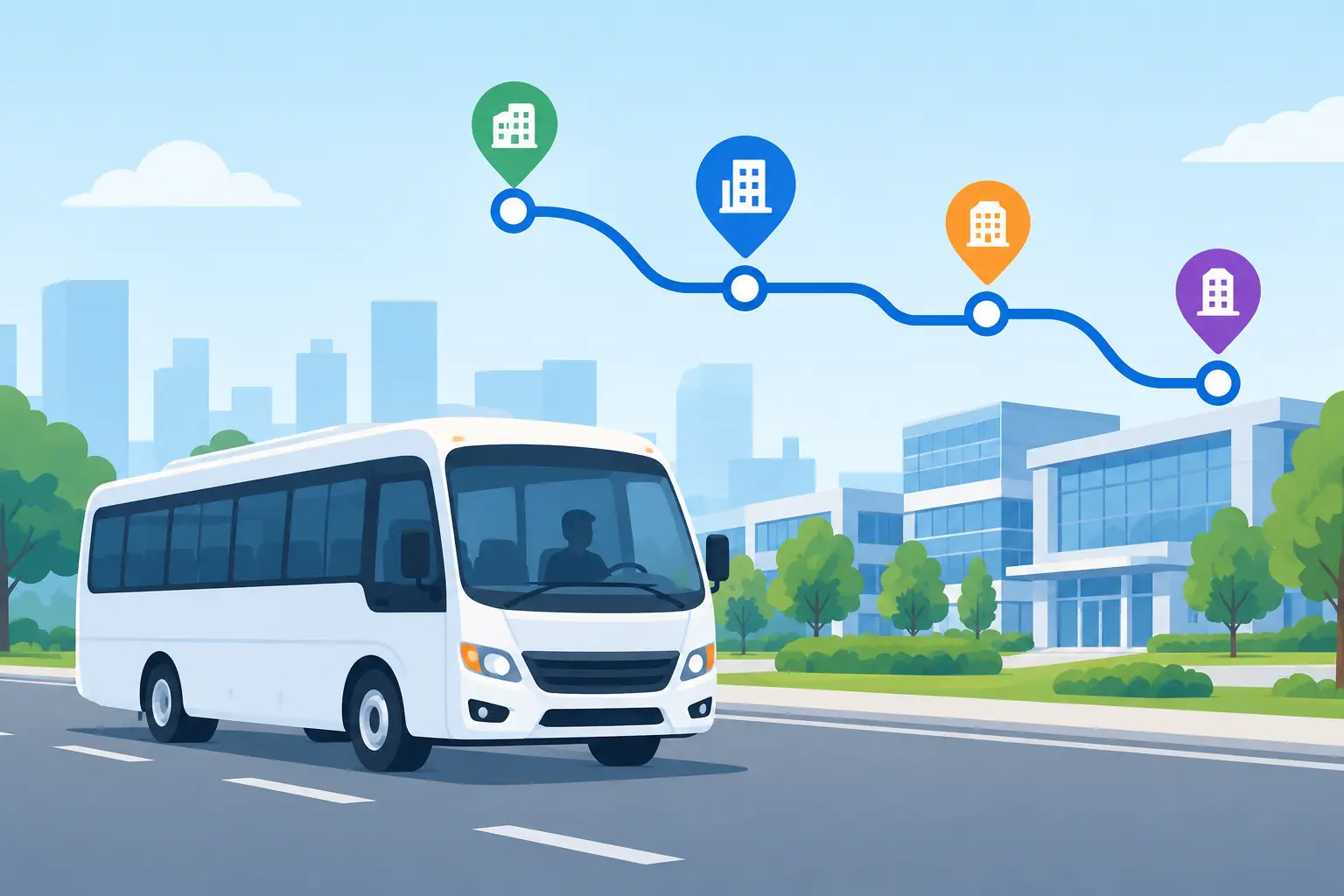
A 7:00 a.m. shift does not begin when employees enter the site. It begins with the first pick-up, the morning traffic conditions, the number of seats available, and whether every worker can reach the workplace without uncertainty. Effective employee shuttle route planning turns those moving parts into a dependable daily operation. For factories, construction sites, offices, and dormitories in Singapore, the objective is straightforward: get people to work safely, on time, and within a controlled transport budget.
A route that looks efficient on a map can still fail in practice. One extra stop may delay an entire bus. A vehicle that is too small creates missed pick-ups. A route built around office hours may be unsuitable for rotating shifts or workers finishing after public transport becomes less convenient. Good planning starts with actual staff travel patterns, then adjusts for the realities of each worksite.
Start With the Workforce, Not the Vehicle
The first decision is not whether to book a 13-seat minibus or a 40-seat bus. It is understanding who needs transport, where they are coming from, and when they must arrive. Gather pick-up addresses or preferred meeting points, expected passenger numbers by shift, reporting times, and end-of-shift release times. This information should be reviewed separately for day, night, weekend, and overtime operations.
Meeting points are usually more practical than door-to-door collection for recurring staff transport. A well-chosen pick-up point near a residential area, MRT station, or dormitory can reduce route time while keeping the commute accessible for employees. However, consolidation has limits. If workers must walk too far, cross unsafe roads, or wait in an exposed area during heavy rain, attendance and morale can suffer.
It also helps to identify passengers with special requirements early. This may include workers carrying tools, staff with limited mobility, employees traveling with safety equipment, or teams needing transport between more than one work location. These requirements affect vehicle selection and boarding time, not just the route itself.
Build Routes Around Arrival Times
The most useful planning question is: what time must everyone be ready to start work? Work backward from that time rather than setting a departure schedule based on guesswork. Include time for vehicle entry, site access procedures, security checks, walking from the drop-off point, and a realistic traffic buffer.
For example, a worksite may require employees to be at a safety briefing by 7:30 a.m. If the bus arrives at the gate at 7:28 a.m., the transport has not done its job. The target arrival should allow staff to enter, settle in, and report without rushing. For sites with strict clock-in rules, a 10- to 15-minute buffer is often sensible. The right allowance depends on the site layout and the reliability of road conditions along the route.
Morning and evening routes should not automatically mirror one another. Peak-hour traffic, road access restrictions, and different passenger loads can make the return journey behave differently. A late-night drop-off route may also need fewer stops, while an evening route serving multiple residential zones may need additional capacity.
Plan for Shifts as Separate Transport Programs
Companies operating multiple shifts should treat each shift as its own service plan. The 7:00 a.m. workforce, the afternoon crew, and overnight personnel may live in different areas and have different attendance levels. Combining them into one broad route often leads to unnecessary mileage and long ride times.
A practical shift plan specifies the required arrival time, pick-up sequence, vehicle capacity, driver reporting time, and contingency procedure for each movement. It should also account for shift handovers. When one bus is used across several runs, even a small delay on the first trip can affect the next team.
Match Capacity to Real Passenger Demand
Overbooking wastes money, but underestimating capacity is more damaging. One employee left behind can delay production, create safety concerns, and force a last-minute transport arrangement. Use average passenger numbers as a starting point, then plan for normal variation such as new hires, temporary staff, overtime workers, and visitors.
A 13-seat minibus can be a cost-effective choice for a compact route or smaller team. A 23-seat bus suits medium-sized groups that need more room without operating a large coach. For high-volume factory, dormitory, or construction movements, a 40-seat bus may reduce the number of vehicles and simplify supervision.
The best choice is not always the largest vehicle. A 40-seat bus running half empty across the island may cost more and take longer than two smaller, targeted routes. On the other hand, splitting a large group into too many small vehicles can increase coordination work and driver costs. Capacity decisions should be reviewed after the first few weeks of service, once actual ridership is clear.
Use Fewer Stops, But Make Them Useful
Every stop carries a time cost. The bus must slow down, pull in safely, wait for boarding, and rejoin traffic. On a route with many passengers, a few poorly placed stops can add 20 minutes or more to a journey. That is why employee shuttle route planning should focus on useful collection points rather than trying to serve every individual address.
A strong stop should be easy to find, safe for boarding, close to the intended group of employees, and practical for the vehicle to enter and leave. Avoid locations with frequent parking conflicts, narrow roads, complicated U-turns, or unreliable curb access. A stop that works for a private car may not work for a 23- or 40-seat bus.
Clear communication matters just as much as location. Employees need the exact meeting point, scheduled pick-up time, and a contact process if they are running late or cannot travel. Drivers should have the same confirmed information, including the number of expected passengers at each stop.
Include Traffic, Site Access, and Weather in the Plan
Singapore is compact, but commute times can change quickly. Expressways, industrial areas, construction zones, school traffic, and peak-hour bottlenecks all affect route performance. A route should be tested during the same time window it will operate, not only reviewed on a map during quiet hours.
Site access deserves special attention. Some factories and construction sites have separate gates for buses, restricted entry periods, security registration, or limited turning space. Confirm where the vehicle can wait, drop off, and pick up without blocking site operations. For large teams, staggered arrival slots can prevent a queue of buses at the gate.
Weather is another operational factor. Heavy rain can slow boarding, create traffic congestion, and make uncovered waiting areas uncomfortable. Building a modest buffer into the timetable is usually more effective than expecting drivers to recover lost time through faster driving. Punctual service must always be safe service.
Keep a Simple Operating Record
A recurring shuttle improves when decisions are based on records rather than complaints alone. The operations team should track a small set of practical details after launch:
- Actual departure and arrival times by shift
- Passenger counts and no-show patterns
- Delays caused by traffic, site access, or late boarding
- Requests for new stops, changed shifts, or extra capacity
- Driver observations about unsafe or impractical pick-up locations
Review this information regularly, especially after hiring changes, a site move, new dormitory arrangements, or changes to shift patterns. A route that performed well six months ago may no longer match the workforce.
Choose a Transport Partner That Can Adjust
Recurring employee transport is not a one-time charter. It requires professional drivers, reliable vehicles, clear communication, and the ability to respond when operations change. A provider should be able to recommend a suitable vehicle size, support routes across Singapore, and plan around early mornings, late finishes, and rotating shifts.
Singapore Workers Transport supports customized staff shuttle arrangements for worksites, offices, dormitories, and industrial locations, with 13-, 23-, and 40-seat vehicle options. The right arrangement can be a single direct route, several feeder pick-ups, or separate services for different shifts. What matters is that the transport plan fits the people and the operating schedule.
The most dependable route is rarely the one with the most stops or the tightest timetable. It is the route employees understand, drivers can operate safely, and managers can rely on every working day. Start with accurate workforce data, leave room for real conditions, and keep reviewing the service as your team changes.