




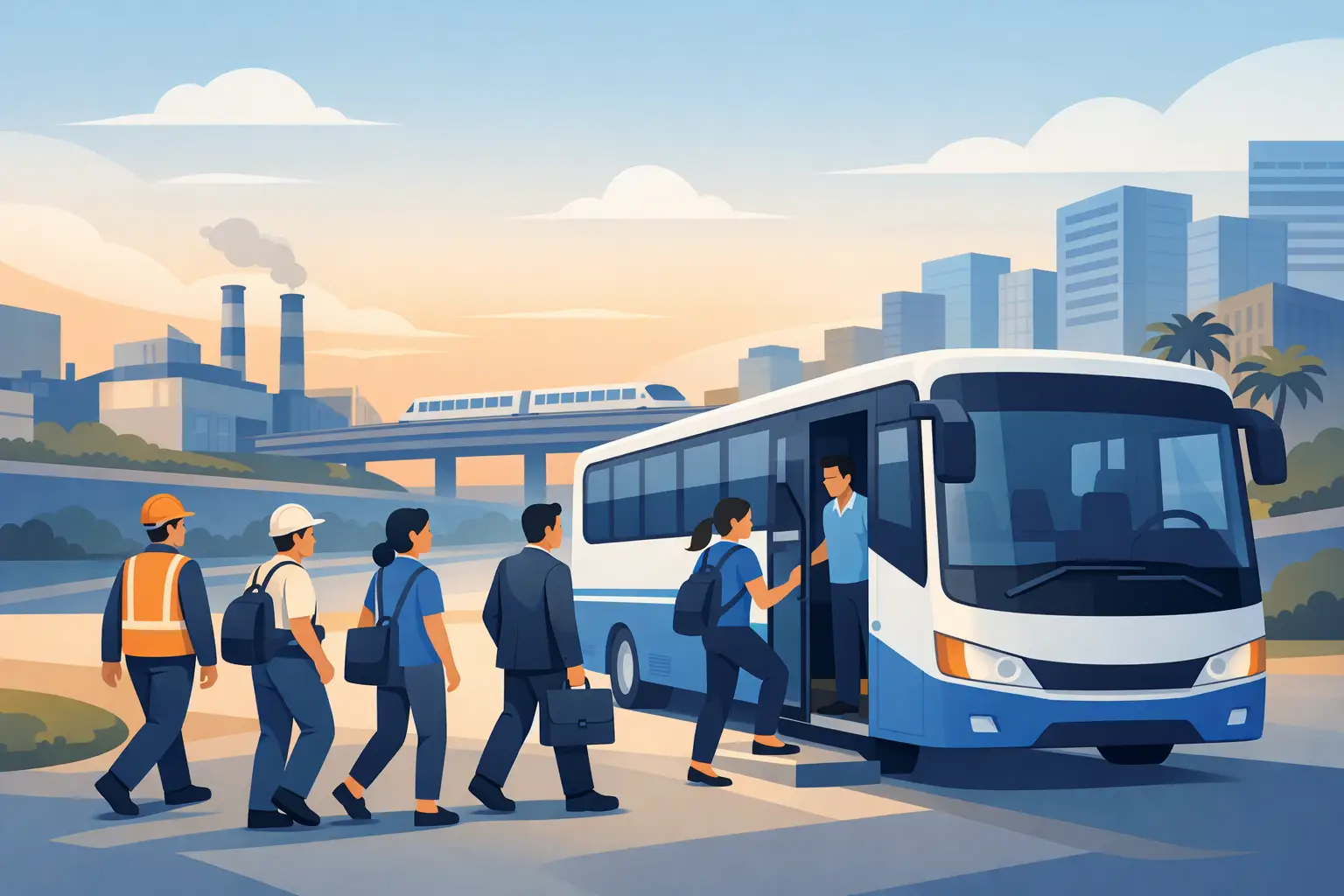
A Jurong worksite can be only a few kilometers from an employee’s home and still be difficult to reach before a 7:00 a.m. shift. Industrial areas, changing shift times, limited direct public transport, and bad-weather delays all affect attendance. Reliable staff transport Jurong services give employers control over that daily movement, helping teams arrive safely, together, and ready to work.
For factories, construction projects, warehouses, offices, and dormitory-based workforces, transport is not simply an employee benefit. It is part of the operating plan. A late crew can delay production, handovers, deliveries, and site access. The right shuttle arrangement reduces those risks without forcing managers to coordinate individual rides every day.
Why Staff Transport Jurong Matters for Operations
Jurong is home to busy industrial, commercial, and logistics locations, from Jurong Island and Tuas-facing routes to Jurong East business areas. Employees may live across Singapore, while their reporting time is fixed and their worksite may not be close to an MRT station. When a group relies on separate public transport connections, a small disruption can become a late-start problem for an entire department.
A dedicated staff shuttle creates a defined pick-up plan. Employees know where to wait, the driver follows an agreed route, and the supervisor knows when the team is expected to arrive. This is especially useful for early morning, late-night, split-shift, and rotating schedules, when public transport options may be less convenient.
There is also a safety consideration. After long shifts, workers should not need to make multiple transfers or wait alone for transport. A professionally driven vehicle provides a more direct trip between approved pick-up points and the worksite. For employers, that means a practical way to support staff welfare while keeping daily operations moving.
Start With the Actual Shift Pattern
The best transport arrangement begins with the timetable, not the vehicle. Before requesting a quote, identify the shift start and end times, number of passengers, worksite entrance, and expected journey windows. A 40-person morning crew has different needs from an eight-person engineering team on a late call-out.
It also helps to separate fixed requirements from flexible ones. Fixed details may include site reporting time, mandatory pick-up points, and the number of workers who must travel daily. Flexible details might include alternate pick-up locations, overtime departures, or extra capacity during peak production periods. Clear information allows the transport provider to plan an efficient route instead of pricing a route that looks good on paper but causes unnecessary detours.
Allow realistic time for boarding, traffic, and site entry. A service that arrives exactly at shift start is already late. For most workforces, the target should be an arrival buffer that gives employees time to enter, check in, change, or attend a briefing before work begins.
One Route Is Not Always the Cheapest Route
Combining every passenger into one large bus may appear economical, but it can become inefficient if the pick-up area is too spread out. A long collection route can make the first passengers board very early and still leave the vehicle vulnerable to traffic delays.
In some cases, two smaller vehicles serving separate zones are the better choice. In others, a central meeting point near a transport hub keeps the route short and predictable. The practical answer depends on headcount, employee locations, shift timings, and the cost of lost time when a crew arrives late.
Choose Vehicle Capacity With Room to Spare
Vehicle size should match the regular passenger count, but it should also account for real-life variation. New hires, temporary staff, supervisors, and occasional visitors can quickly fill every available seat. Planning at absolute maximum capacity leaves no margin when the workforce changes.
For smaller teams, 6- to 13-seat MPVs and vans can provide direct point-to-point movement with less route complexity. Toyota Noah or Voxy models work well for compact groups, while Toyota HiAce vans offer practical room for staff and light equipment. Mercedes-Benz Viano, Alphard, and Vellfire options can suit executive site visits, client movements, or VIP transfers where additional comfort is expected.
For recurring workforce transport, 13-seat minibuses, 23-seat buses, and 40-seat buses are often more suitable. They provide organized group travel and reduce the number of vehicles entering a busy site. Larger vehicles make the most sense when passenger numbers are stable and pick-up locations can be grouped efficiently.
Do not overlook luggage and equipment. A team traveling with tool bags, safety gear, samples, or personal belongings may require more room than the passenger count suggests. The same applies to airport pick-ups for overseas staff, where luggage space matters as much as seating capacity.
Build Routes Around Reliability, Not Just Distance
The shortest route on a map is not always the most reliable route during shift-change traffic. A good staff transport plan considers recurring congestion, access restrictions, loading areas, security checkpoints, and the time needed for passengers to board safely.
Pick-up points should be easy to recognize and safe for waiting passengers. They should not block traffic, create confusion, or require drivers to make repeated calls to locate employees. For a large workforce, assigning a route coordinator or site representative can help communicate schedule changes and confirm attendance.
It is worth setting a clear late-arrival policy as well. Drivers should follow the agreed waiting time, and employees should understand that a daily shuttle must protect the schedule for everyone on board. This is not about being inflexible. It is about preventing one delayed passenger from affecting an entire shift.
Plan for Changes Before They Become Disruptions
Worksites change. Project phases add workers, production schedules move, and overtime becomes necessary with little notice. A transport plan should be able to adapt when passenger counts or operating hours change.
For example, a contractor may need a 40-seat bus during the main construction phase but only a 13-seat minibus after the project enters maintenance. A factory may run additional night shifts during a seasonal production period. Discussing these possibilities early makes it easier to adjust vehicle size, departure times, or route coverage without scrambling for last-minute transport.
Singapore Workers Transport can arrange customized recurring routes for employee pick-up and drop-off, as well as one-time buses or vans for training days, site transfers, corporate events, and airport movements. That flexibility matters when a business needs daily transport most of the year but occasional extra vehicles during busy periods.
What to Expect From a Professional Shuttle Provider
A dependable provider should offer more than a vehicle and driver. Businesses need clear communication, suitable capacity, licensed and insured vehicles, and drivers who understand that punctuality is part of the service. For a recurring contract, the provider should be able to confirm the route, schedule, passenger requirements, and any special site instructions before service begins.
Pricing should also be understandable. The total cost may depend on vehicle type, route distance, operating hours, waiting time, frequency, and whether the booking is one-off or recurring. A daily contract can offer better planning and cost control for stable routes, while hourly or point-to-point bookings may be better for irregular requirements.
Ask practical questions before committing: Can the provider support both day and night shifts? What happens if the shift time changes? Is there a contact channel for urgent updates? Can a larger or smaller vehicle be arranged as headcount changes? These details reveal whether the service is designed for real operations or only for occasional trips.
A Better Daily Experience for Staff and Supervisors
The value of staff transport extends beyond attendance figures. Employees who have a predictable commute can plan their day with more confidence. Supervisors spend less time chasing late arrivals. HR and operations teams have a clearer process for moving new staff, visitors, and temporary teams to the correct location.
For workforces serving multiple Jurong locations, a shuttle can also make redeployment easier. Rather than asking employees to arrange their own travel between a dormitory, training center, office, and site, management can provide a coordinated movement plan. This is particularly useful when workers are unfamiliar with the area or reporting to a new project location.
A comfortable, clean vehicle and a professional driver set the right tone as well. Workforce transport does not need to be a luxury service to be respectful. Reliable air-conditioned travel, sensible routing, and safe driving show employees that their time matters.
When planning staff transport in Jurong, start with the next shift rather than the broadest promise. Confirm who needs to travel, where they will board, what time they must arrive, and how the plan will respond when operations change. A well-run shuttle route can make the workday more predictable before the first task even begins.
