




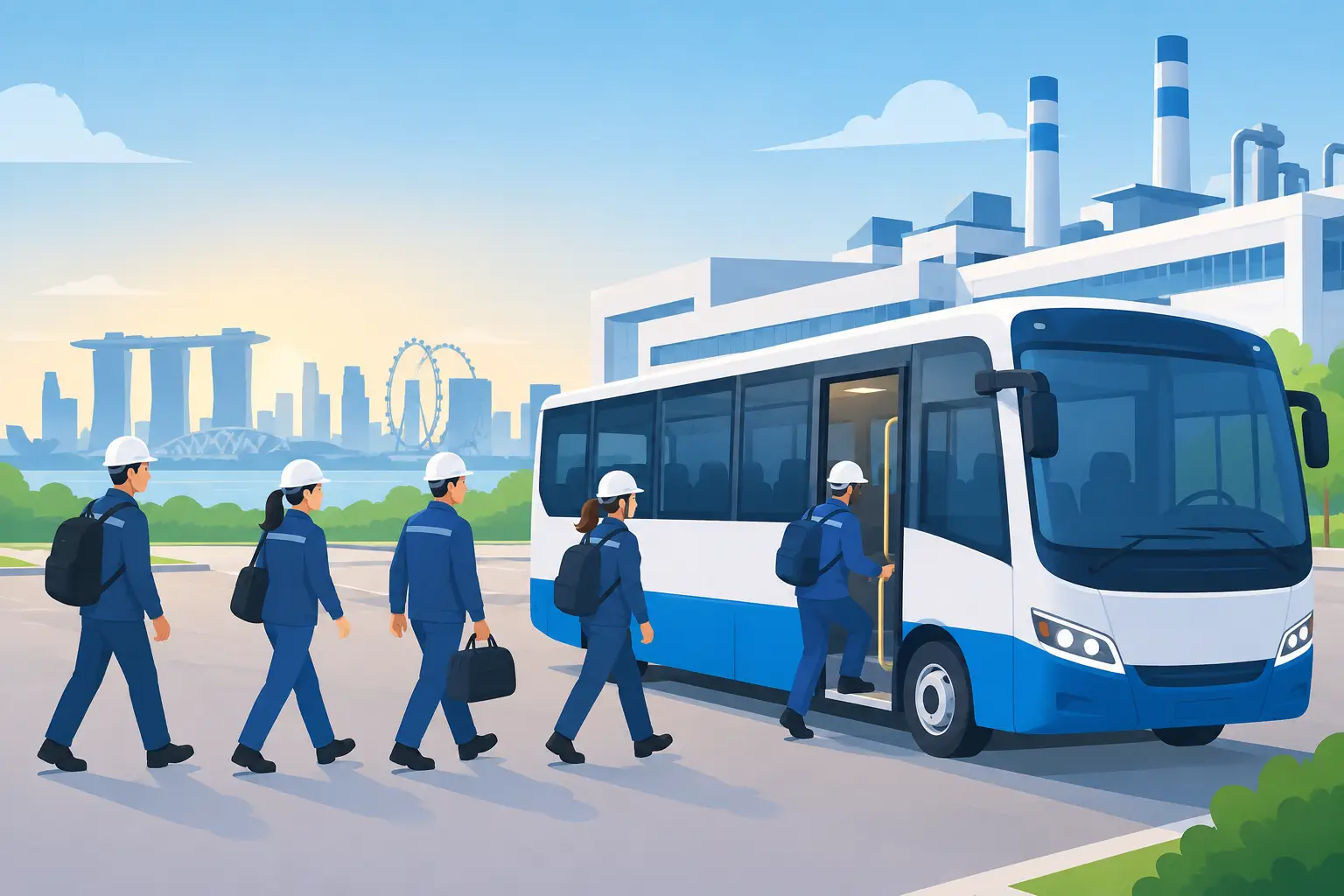
A late bus does more than delay a morning shift. It can leave a production line short-staffed, push back safety briefings, and force supervisors to reshuffle work at the last minute. A dependable factory transport service Singapore gives operations teams control over one of the most overlooked parts of workforce planning: how employees get to site, on time and ready to work.
For factories, warehouses, construction sites, and industrial facilities, public transportation may not match shift hours or site locations. Employees may be traveling from several neighborhoods or dormitories, while schedules change between day, night, split, and overtime shifts. The right transport arrangement turns those moving parts into a clear daily plan.
What a Factory Transport Service Should Solve
Factory transportation is not simply about hiring a bus with enough seats. It is about building a practical route and schedule around the way your operation runs. That includes pickup points, start times, worker headcount, site access rules, and the need to communicate quickly when plans change.
A good service should reduce uncertainty for both management and employees. Workers know where and when to board. Site supervisors can expect crews to arrive together. HR and operations teams have one transport contact rather than handling repeated ad hoc bookings. This is particularly valuable for facilities outside major transit hubs or teams starting before regular commuting peaks.
Punctuality matters, but it is only one part of the job. Drivers must be professional, familiar with local roads, and able to manage designated pickup and drop-off points safely. Vehicles should be properly licensed, insured, and maintained for daily use. For recurring contracts, the provider should also be able to adjust when headcount, shift patterns, or worksite locations change.
Plan Routes Around Shifts, Not Assumptions
The most effective factory transport service in Singapore begins with real operating details. A route that looks efficient on a map can become unreliable if it ignores boarding time, shift handovers, traffic conditions, or access queues at the facility gate.
Start by identifying where employees are actually coming from. Some businesses need a single direct route from a dormitory to a factory. Others need several pickup points across industrial areas, residential estates, or MRT-adjacent locations. Combining too many stops may lower the price per passenger, but it can also lengthen the commute and increase the risk of delays. A direct service costs more in some cases, yet may be worthwhile for critical teams or overnight shifts.
Shift timing deserves the same attention. It is usually better to schedule arrival with enough buffer for workers to clock in, attend a briefing, change into required gear, or clear security procedures. For a 7:00 a.m. start, arriving at the gate at 6:59 a.m. is not a transport plan. The same principle applies to return trips. A bus that leaves immediately after a shift may not suit workers who need time for handover, meals, or equipment return.
For rotating schedules, confirm whether the service can support different departure times on different days. Fixed routes are often the most cost-effective choice, but flexibility becomes essential during peak production, project mobilization, or temporary manpower increases.
Match Vehicle Capacity to Real Headcount
Vehicle size affects comfort, cost, and service reliability. A 13-seat minibus may suit a small technical crew, while a 23-seat or 40-seat bus is more practical for larger departments traveling on the same schedule. Booking too few seats creates daily pressure and leaves no room for new hires or occasional additional workers. Booking a substantially oversized vehicle can add unnecessary cost.
It helps to plan for a reasonable buffer rather than only the exact number of regular passengers. Headcount changes, trainees join, and replacement workers may need transport at short notice. Ask the provider how additional trips or vehicle upgrades are handled if demand rises.
Seating capacity is not the only consideration. Employees traveling long distances or returning from physically demanding shifts benefit from clean, air-conditioned vehicles and adequate space. Comfort supports attendance and morale, especially when the commute is part of the daily routine rather than a one-time transfer.
Build Safety and Accountability Into the Contract
Workforce transport should be managed with the same care as other operational services. Before starting, provide clear pickup instructions, site entry procedures, passenger rules, and emergency contacts. Confirm who has authority to approve route changes or extra trips. This avoids confusion when a supervisor requests a last-minute adjustment that affects pricing or the next shift.
A consistent driver and vehicle can be helpful for recurring routes because they become familiar with the schedule, pickup locations, and site requirements. However, a reliable provider should also have a contingency plan if a vehicle requires servicing or a driver is unavailable. Ask direct questions about backup arrangements rather than assuming every daily route has one.
Passenger conduct also matters. Clear expectations around boarding times, seat use, food, and respectful behavior help keep the service safe and comfortable for everyone. If workers are transported across multiple pickup points, a designated site representative or group leader can help communicate schedule updates and report no-shows.
Control Transport Costs Without Cutting Corners
Daily staff transport is an operating expense, so price matters. The lowest quote is not always the lowest total cost once late arrivals, missed shifts, repeated taxi claims, or emergency replacements are considered. Look for transparent rates and a clear explanation of what is included in the arrangement.
The price will depend on vehicle size, route distance, number of stops, daily hours, shift frequency, and whether the service is one-way or round-trip. A standard recurring route is generally easier to budget than individual employee reimbursements or last-minute ride bookings. It can also make costs more predictable across a project period.
There are sensible ways to manage spending without compromising reliability. Group employees by shift and area where possible, keep pickup points practical, and review occupancy periodically. If a route is consistently underfilled, it may be possible to consolidate it. If it is frequently full, adding capacity early is better than relying on daily overflow arrangements.
Do not overlook overtime and weekend work. These are often where transport plans fail because the regular route no longer applies. Agree in advance on the process for extra trips, waiting time, and late-night return journeys. A clear arrangement protects both your team and your budget.
When One-Off Bookings Make Sense
Not every factory transport need requires a long-term contract. One-off bus or minibus bookings can be useful for safety training, off-site meetings, company events, recruitment drives, site inspections, and temporary worker transfers. They are also useful when a project begins before regular workforce numbers are confirmed.
For executive visitors, client teams, or management travel, a premium MPV may be a better fit than a staff bus. The key is choosing the vehicle for the purpose. A practical worker shuttle and a comfortable airport transfer can come from the same provider, but they should be planned differently.
Singapore Workers Transport supports recurring employee routes as well as one-time group movements, with vehicle options ranging from smaller MPVs and vans to 13-, 23-, and 40-seat buses. That range can simplify planning for businesses that need daily workforce travel and occasional special trips under one dependable transport partner.
Questions to Ask Before You Book
Before confirming a provider, ask how they will handle your actual operating conditions. Can they support early morning and night shifts? Can pickup points be customized? What vehicle is recommended for your average and peak headcount? How are schedule changes communicated? What happens if a bus is delayed or unavailable?
Also confirm the booking and support process. Fast communication by phone, SMS, or WhatsApp is useful when supervisors need an answer quickly. For recurring services, put route details, operating days, pickup times, approved contacts, and pricing terms in writing. Small details prevent larger issues once the service is running every day.
A factory transport arrangement works best when it is reviewed after the first few weeks. Check arrival performance, passenger numbers, route timing, and feedback from site supervisors. A practical adjustment – one less stop, a slightly earlier departure, or a larger vehicle for a busy shift – can make the daily commute far more reliable for everyone who depends on it.
When workers can count on getting to work safely and on time, the day starts with fewer calls, fewer disruptions, and more attention on the work that needs to get done.