




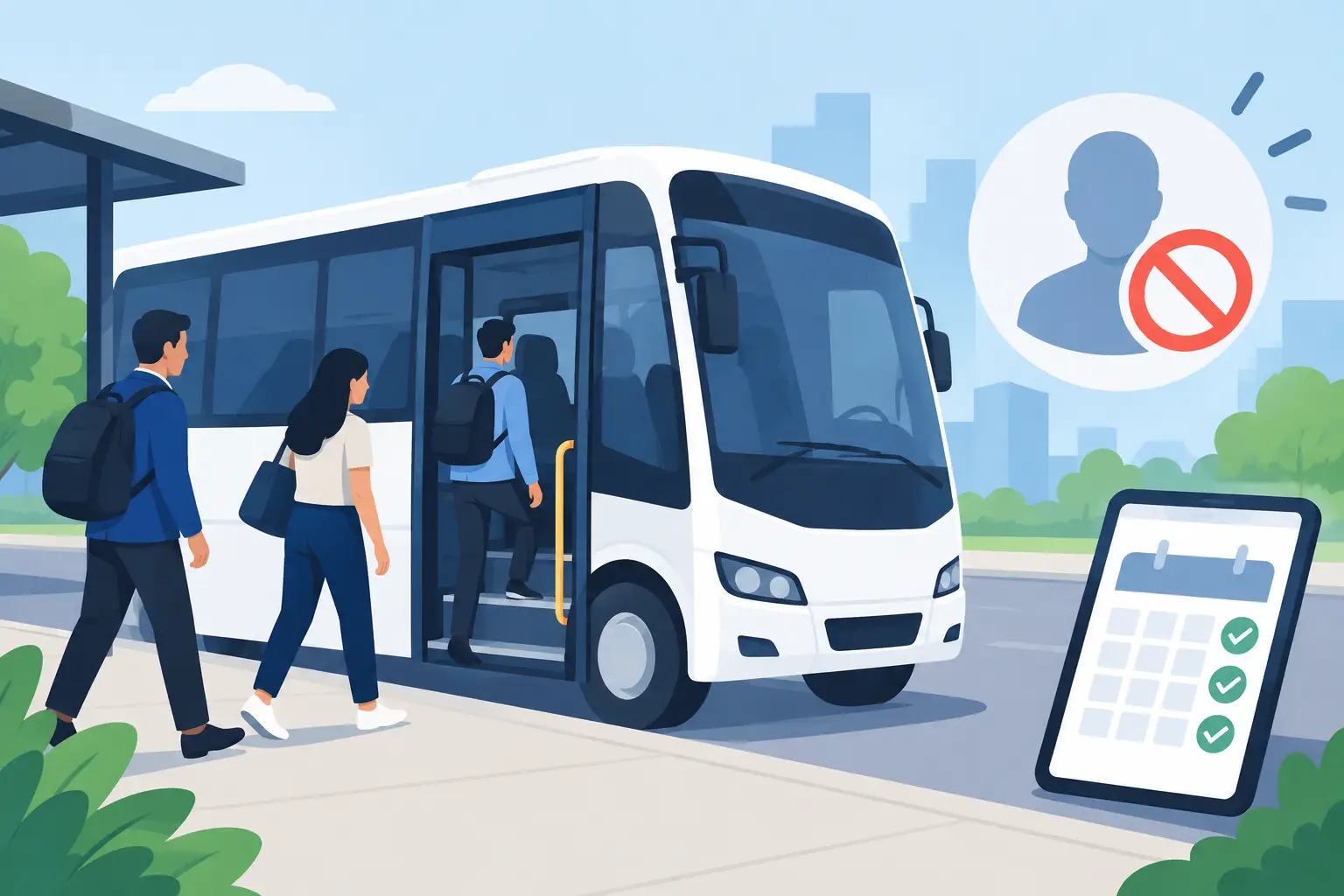
A 7:00 a.m. shift can be delayed by a single empty seat. When workers miss a scheduled shuttle, supervisors may need to call replacements, arrange last-minute rides, or start short-handed. The best ways to cut no shows are not about sending more messages alone. They start with a transport plan that is easy for workers to understand, practical for their shift patterns, and reliable enough to trust every day.
For factories, construction sites, offices, dormitories, and remote work locations, staff transport is part of daily operations. A well-run shuttle service helps employees arrive safely and on time. It also gives managers a clearer view of who is expected on site and when.
Start With the Real Reason Workers Miss the Bus
A no-show is not always a lack of commitment. Workers may miss a bus because the pickup point changed, the schedule was unclear, overtime ran late, or a shift swap was never communicated to the transport coordinator. Some employees may also stop using a shuttle if they have experienced repeated delays or have difficulty reaching the driver when something changes.
Before setting new rules, review no-show patterns for at least two to four weeks. Compare missed rides by route, pickup point, day of the week, and shift time. If one 5:30 a.m. route has frequent absences while an afternoon route is full, the issue may be the pickup location, not attendance discipline.
Speak with site supervisors and a small group of regular riders. Direct questions work best: Is the pickup point safe and easy to reach? Is the bus arriving too early? Are shift changes reaching workers in time? Practical feedback often reveals a small operational issue that can be corrected quickly.
Make Schedules Simple Enough to Follow at a Glance
A staff shuttle schedule should answer four questions without requiring a call to HR: where to wait, what time to be there, which vehicle to board, and where the bus will arrive. Confusion grows when schedules are shared only as long text messages or when different departments circulate different versions.
Use one approved schedule for each route and include the route name, pickup point, departure time, destination, and coordinator contact. If the vehicle has a recognizable identifier, such as a plate number or route label, include that as well. For large workforces, post the schedule in dormitories, break rooms, site offices, and the employee communication channel.
Build in a realistic arrival buffer. Asking workers to report at the pickup point five to 10 minutes before departure is reasonable. Asking them to wait 25 minutes because the timing is uncertain is not. Clear expectations protect punctual riders while giving drivers enough time to depart on schedule.
Keep One Source of Truth During Changes
Route changes are where no-shows often rise. A temporary road closure, new dormitory, revised shift start, or added worksite can affect dozens of people at once. Assign one person or team to approve schedule changes and send the same update to supervisors, employees, and the transport provider.
State the effective date clearly. Instead of saying, “Tomorrow morning’s pickup may change,” say, “From Monday, May 12, the Jurong West pickup will move to Block 654 bus bay at 6:10 a.m.” Specific instructions reduce guesswork.
Send Reminders That Match Shift Work
A monthly schedule is useful, but it should not be the only reminder. Shift workers manage changing hours, overtime, rest days, and family commitments. A short reminder sent at the right time is more helpful than repeated generic announcements.
For recurring routes, send a reminder the evening before and a brief confirmation shortly before pickup. WhatsApp or SMS is often effective because workers can read the message without downloading another app. Keep the wording direct: route, pickup time, pickup point, and a number to contact if plans change.
Avoid over-messaging. If employees receive too many notices, they may ignore the important ones. Regular routes need simple, predictable reminders. Use urgent alerts only for meaningful changes, such as a delayed vehicle, diversion, or canceled shift.
Confirm Attendance for Higher-Risk Trips
Daily confirmation is not necessary for every stable shuttle route. It can create extra administration and frustrate employees who ride consistently. However, it is valuable for early-morning shifts, newly launched routes, workers assigned to rotating sites, airport movements, events, and one-time group transfers.
A simple reply-based system can work well. Ask workers to confirm by a fixed time, then share the final passenger count with the driver or transport coordinator. If a worker does not reply, a supervisor can check whether they are scheduled to work, on leave, or using another travel arrangement.
For recurring workforce transport, attendance data becomes more useful over time. It can show whether a 23-seat minibus is enough for a route, whether a 40-seat bus is running below capacity, or whether two nearby pickup points should be combined. Right-sizing the vehicle helps control cost without leaving workers behind.
Treat Pickup Points as Part of the Service
A shuttle can be punctual and still have no-shows if the pickup point is inconvenient. The best location is not always the one closest on a map. Consider pedestrian access, lighting, shelter from rain, safe crossing points, space for the vehicle to stop, and whether workers can identify the waiting area easily before sunrise or after dark.
In Singapore, rain and traffic conditions can quickly affect a commute. A pickup point with shelter and a safe stopping area can make a noticeable difference to rider confidence. For industrial zones and dormitory routes, review the location after the first week rather than assuming the original plan is perfect.
Drivers should also have clear instructions on where to stop and how long to wait. A vehicle that stops at different points each day creates uncertainty, especially for new employees. Consistency is one of the simplest ways to improve attendance.
Coordinate Transport With Shift Planning
Transport should not be planned after the roster is finalized. When HR, operations, and site supervisors share shift information with the transport coordinator early, routes can reflect actual staffing needs. This is especially important for construction projects, factories with multiple shifts, and worksites where manpower changes frequently.
Include shuttle information in the new-hire process. Employees should know their route, pickup point, expected conduct, and whom to contact before their first working day. A first-day no-show is often a communication problem, not a transport failure.
It also helps to define what happens when a worker misses the bus. Employees should know whether they must notify a supervisor, arrange their own transport, or report to a designated contact. A fair, clear policy prevents last-minute confusion while keeping accountability in place.
Choose a Transport Partner That Communicates Fast
No transport plan can prevent every disruption. A vehicle may encounter heavier traffic, a worker may be transferred to another site, or an unexpected overtime shift may need additional capacity. The difference is how quickly the issue is handled.
Look for a provider with professional licensed drivers, suitable vehicle options, dependable route planning, and direct support through channels your team already uses. For example, a recurring staff route may need a 13-seat minibus at first, then a 23- or 40-seat bus as headcount increases. A provider that can adjust capacity without disrupting the route gives operations teams more control.
Singapore Workers Transport supports recurring worker pickup and drop-off arrangements as well as one-time group bookings, with vehicle options for different team sizes. The practical benefit is not simply having a bus available. It is having a responsive contact point when a shift, route, or passenger count changes.
Review No-Shows Without Blaming Every Rider
Track a few useful measures each month: scheduled passengers, actual riders, late arrivals, route delays, and repeated absences by pickup point. Review the numbers with operations and HR, then make one or two targeted improvements rather than changing everything at once.
If a route has low ridership because workers are on rotating rest days, confirmation may solve the issue. If riders are missing the bus because a pickup point is unsafe or hard to find, move the stop. If employees are consistently waiting for a late vehicle, revisit departure times, traffic allowances, or vehicle allocation.
Reliable staff transport is built through clear communication, consistent pickup routines, and quick action when conditions change. When workers know exactly where to be, trust that the vehicle will arrive, and have an easy way to report changes, attendance becomes far easier to manage.